Episode Transcript
[00:00:00] Speaker A: Welcome to Unsung Stewards, a podcast series presented by the Ripple Foundation. I'm Becky Payne, President and CEO of Ripple, which is dedicated to fostering equitable health and well being.
Our podcast spotlights and celebrates individual stewards, people working with others to create the conditions that everyone needs to thrive.
At Ripple, we are dedicated to a future where everyone thrives with no exceptions.
Ripple and our partners have committed ourselves to building that future, which starts with building the will, among others, to join a growing movement to thrive together.
This season on Unsung Stewards, we are talking to stewards within that movement. They are all advancing equity and thriving in their communities and bringing others into this work.
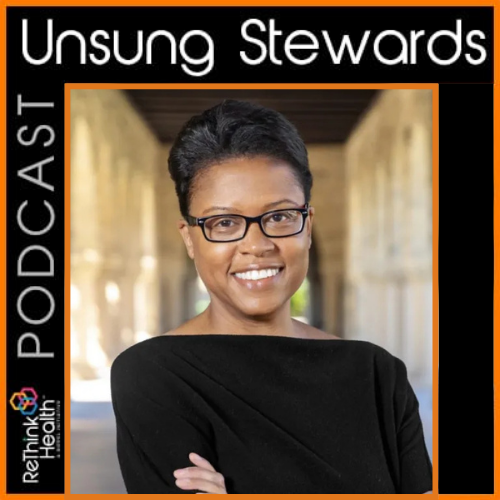
For our final episode this year, I sat down with Dr. Paulette Brown, hindsight Chair of the Journalism and Innovation Hub and Fund in California's Inland Empire. Through her work, Paulette supports local and regional journalism and works to build the region's journalistic muscle. Paulette and I had an incredibly rich conversation about the vital role of local journalism in building belonging and the courage to lean into love for each other and for our communities.
We also explore all of that as part of the movement to Thrive Together.
I hope you enjoy our conversation.
Paulette, thank you so much for agreeing to talk to me today and share a little bit more about you.
[00:01:27] Speaker B: Thank you, Becky. I'm looking forward to this.
[00:01:30] Speaker A: I'd love to start with hearing a bit of your story, your personal story. You come from a long line of storytellers and stewards, so I want to invite you to share a bit more about your family history and how that legacy shaped who you are and what you do now.
[00:01:48] Speaker B: I do love talking about my family.
I grew up in Southern California, the Inland Empire, was born in San Bernardino.
My family was very civically active, and it wasn't just my immediate family. It's really a generational commitment to service and community and civic engagement that started, I know, at least with my grandparents. I'm not sure, possibly even before that, but my grandparents, my dad's parents in North Carolina were sharecroppers.
My family has been in Jones county, kind of tobacco country for generations, actually enslaved in that part of the state, actually in that county.
And we've been able to trace back our family to the actual plantation that my great great great grandmother was born on. But my grandparents, community service was important to them. My grandparents were part of the naacp, registering people to vote when it was pretty dangerous for them to do that in that part of the country at that time.
But they were committed to making sure that their Voices were heard politically and civically. Eventually my parents took took over a local black newspaper, the Black Voice News.
I think it was in part, my dad was looking for something that could be like a family business, but I think also because they were looking at how they can contribute back to their community.
And the newspaper was something they were both active in volunteering for. And then the opportunity came for them to buy the black Voice. So I grew up with newspaper. I'm a second generation publisher and I called myself a steward and I actually call my parents stewards of that paper. It was not started by my parents. People often think it was because it's been in my family for four decades, over almost five decades now. But it was started about 53 years ago by students at University of California, Riverside. We became stewards of this community asset.
And I think of a lot of the work I do with stewardship work besides taking over the newspaper. My mother started an organization called Footsteps to Freedom, which takes educators on a eight day tour learning underground railroad history. And so I talked about being a steward of all of these things. In my work in philanthropy, I would say is the same. I'm a trustee for the James Irvine foundation and our Inland Empire Community Foundation. So I feel like these organizations that I have become a part of and help lead as a board member or board chair is stewarding in these important legacies.
So I see it as kind of everything I do. It's been my passion and commitment. I also come from a line of elected officials. So our civic work is also in that kind of public sphere. My mother was a state assembly member.
My father was a school board member.
My brother was the first black county school board member in San Bernardino.
Both my sisters are very involved in civic work. So yeah, it's a family legacy. I talk about it as service before self.
[00:05:15] Speaker A: Thank you for sharing that. It is such an American story, starting with deep trauma and tragedy and roots in slavery. And yet in spite of all of that, continuing to give back to community in many different forms, in many different ways. So thank you for that. You mentioned Inland Empire and the community foundation and you're a part of their Inland Empire Vital Conditions Network.
As you know, I've had opportunity to visit and for listeners to understand. It's incredible to witness and feel what's happening there on the ground.
So I. I'm wondering. In that vein, I want to ask you to share how the vital conditions as a framework has helped you all come together in the region.
Knowing that it is vast, it's vast in miles it's vast in diversity. It used to be the fastest growing region in the country.
It is a microcosm of the rest of the country in many ways. And this framework has afforded you an opportunity to come together and bridge a lot of different conversations. Could you say a little bit more about what that's done?
[00:06:26] Speaker B: I'll speak from the perspective of our journalism hub and Fund, and I'll just back up a little. When the Community foundation adopted the Vital Conditions Framework, we were celebrating our 80th anniversary as an organization and decided to create eight signature funds. And each one of our board members became a champion for a fund.
And my fund is the Journalism Innovation Hub and Fund. And we're having these conversations around vital conditions. We're looking at how do we organize our local regional media partners into some type of collective collaborative.
[00:07:16] Speaker B: And the vital conditions, for one thing, in the center is civic muscle and belonging. And access to information is in that right. It's the center of everything. You can look at all the other conditions surrounding it, like thriving, natural world, lifelong learning, meaningful work, wealth. All of these things became clear to me as beats in the way we would do our reporting.
So when I learned more about this shared stewardship model and the idea of bridging across divides, I even see the work we do, and I think specifically as the hub being a part of the Vital Conditions Network, as knitters. And I think of the information as kind of the thread that we're bringing together all of these things, and thriving is at the center. So I always talk about, like, we're not just talking about information for information sake. We are really focused on information that will get us to thriving community.
[00:08:12] Speaker A: I want to invite you to say a little more, kind of describe the hub to the listeners and really invite you to share how you think about journalism and storytelling as tools for improving thriving together and strengthening those vital conditions. And I know one of the conversations I had with folks was just how empowering it's been and powerful it's been for them to start to have an outlet to tell their story of the Inland Empire rather than other people's story.
[00:08:44] Speaker B: I've been passionate about the work of local media, and I'm very specific about community media. I grew up, as I mentioned, in a family that was producing what was then a weekly community newspaper, the Black Voices, published, printed every week and distributed every week.
Of course, now with the changes in the way people access information and the changes in technology, we still print weekly, a small number of papers. But the bulk of our engagement comes from our Online presence and then our social media and then we do in person, we're doing more and more in person, face to face work.
Because of my background, I think of local news and I think of community news very much in the spirit of the black press, which that tradition is. 180 year old tradition of community news and information production. And so there's a famous publisher, Ida B. Wells, who was an activist publisher, but she had talked about the press as being like an educator. She has a quote that is, the people must know before they can act. And there is no educator like the press.
And so I always think of the work we do as news organizations as kind of the information that people need to act and hopefully to act in their best interest. The language that we like to use with our hub is really with thriving community at the center of that. And honestly, I will admit the old news model did not serve every community and it actually harmed communities, which we like to talk about. When we're talking about the work we're trying to do now is communities like mine were harmed.
And our community here in our region is over half Latino harmed by that traditional model. So we're not going back to that. We don't want to go back to that. So we're like, what does it look like now? So we're working with a kind of smaller cohort of local hyperlocal digital news organizations. We have a media literacy organization because we can produce good news all day long, but if people don't understand how to bet news, it's kind of a waste of time. So we have a media literacy organization called Mindful Media. It's just really brilliant young folks who are doing that work in our region. And when I say young folks, anyone under the age of 50 is young to me. So young folks in our region, One of the other issues is when we talk about a healthy news and media ecosystem, we don't have training for producers in our region. None of our public institutions have a bachelor's degree in journalism, for instance. And so one of our partners, California State University, San Bernardino, they are now actually going to, I think it's going to be next year. They had a minor in journalism, they're going to turn that into a bachelor's level program. So we're looking at pipeline, we're looking at creators and storytellers who don't consider themselves journalists, but they're telling the stories of their community.
And so part of what we're doing at the hub, we're developing a strategy to bring in about 25 creators from across this vast region and look at the trainings around attributes of journalism.
Right. How do we partner when we talk about that bridging and knitting, how do we utilize their platform, their storytelling, but also to tell this message of thriving?
We still don't know necessarily what those stories are. Part of our process is in conversation with community first.
So as an example, we're in an area where we have constant threat of wildfires. I'm in Riverside County.
Homes are being built in places that they weren't being built in before, right at the foothills, the mountain and canyons. So we have these major threats of wildfire and we've been thinking around what's the information people need to be able to prepare for wildfire.
And so our funding that came from the hub was actually to do a series of reporting projects on wildfire preparedness. And part of it was talking to people who've survived in our region, in our community, talking to experts about how people can be prepared, partnering with nonprofit organizations that are doing work around climate resiliency and then having events in the community where we come out, we talk about being prepared for emergencies.
And now we have a funder who's really interested in funding climate resiliency. And we're like, that is the thriving natural world, vital condition.
And we want to do human centered climate resiliency reporting where we talk to the people first.
And so it's helped us in the way we're structuring the hub. We're doing something similar with health equity health care in our region.
Almost half of our region is on the Medi Cal program. And with the threats to funding, it's going to have an outsized impact in our region.
We are talking to healthcare providers, we're talking to nonprofit organizations that focus on health equity. And then we're talking to people in community to build out what we'll consider this health equity reporting hub.
So we're able to build out the hub in this way and focus on the work our partners are doing and then how do we.
[00:14:44] Speaker B: Share that more broadly?
[00:14:47] Speaker A: You've given so many examples of the impact of this hub, which I just want to remind people is about a year old, it's very new. And yet what I'm taking away from this is the power of.
[00:15:06] Speaker A: Suspending.
[00:15:08] Speaker A: The age old traditions of the systems that tell you this is the way it has to be and the way we've done it, and coming in with the notion of this is the way we want it to be and the way we need it to be from Our community and what that has unlocked for you across not just journalism and storytelling, but you're influencing many other parts of the ecosystem within your community. I wonder if you think about it like that. If you step back and reflect on the domino effect of the first courageous act.
We just start with creating the hub and really demanding a different information ecosystem and putting a different model of that forward into your region.
Can you just reflect a little bit more about the power of the first courageous act and what that's enabled you to unlock in other people beyond what you're capable of reaching alone?
[00:16:13] Speaker B: You know, it makes me think of that idea of the pebble that you throw into the pond and like the ripple, the rippling effect that can happen because of it. I think when you think of the role of community media, I keep reading about these new models. Sometimes I'll read or I'll be talking to a funder and oh, this group is doing this new model. I'm like, yeah, community media was doing that 30 years ago because we had to. We had community reporters who we couldn't afford to pay who just said, this is what I want to do. I love reporting on the social events in Moreno Valley. Can I take pictures and write it and send that in to you every week? We had a woman named Juanita Barnes who did that in our community. Older woman, retired, and that's just what she loved to do. And so she had a column about everything that was going on in Moreno Valley.
And so the community news organizations have always been so tied on the ground to what's happening. So the fact that we are now centering that in our hub and not the other models seemed like maybe courageous to do it, but it was like, that's really my perspective. That's what I've grown up doing. And so I think that now that because of that tightness and closeness to community is why we've had the tremendous, I think, success not just from like my work, Black Place News, but we have another organization called Inland Empire Community News that two young people just purchased from the owner, who is my parents age, and she was retiring and she didn't want to just stop publishing. So two young people have bought it and they've modernized, right? They. They're doing a lot more with social media.
But the relationship that those publications have had with community didn't change even with new owners. So it's become the way that we've centered, I think, the work of community news. And the closest that we've been able to move so quickly and with the larger community now really shifting around vital conditions. It makes it easy for all of us to even work outside of our media partners, with the nonprofit organizations and with other institutions in the region.
[00:18:34] Speaker A: It does seem like this is such a an example of what good, strong journalism was always meant to be and what that represents in the community. I love the quote you shared about educating people with the information they need to act.
And we talk about, in thinking about the broader movement to thrive together, which you all are absolutely a part of. And we consider shining stars and role models in that.
We talk about how important it is to bring others into that and build more will to take these acts that will be necessary in order for us to thrive together. So I'm wondering, when you think about building will and building will specifically to create the conditions for all of us to thrive together, how do you think about the journalism Hub and local journalism in contribution to that?
[00:19:33] Speaker B: I think of two recent conversations that I had. One is a conversation I had with Jack Dangerman. And he and his wife are founders of esri, which is the global leader in GIS software. And we were just presenting to him in just a private meeting about the Hub. And we actually launched last year in June on esri's campus at an event called the Redlands Forum. That was an opportunity to bring together leaders that work in the different areas of leadership in the city, in the kind of surrounding communities. And it's like a monthly, in person, everyone in the room conversation.
And one of the things Jack said to me was like, I see the work you're doing with the Hub as similar to what the vision that we had for this forum.
And he said, but I see it as this. We called it this new localism. You're bringing together people to talk about how do we make this place better.
And he said something about the place we love.
And what was interesting to me is about a month later, I was at California Economic Summit, and it was a panel on the Free Press that I helped organize in partnership with the McCratchie foundation out of the Central Valley and the Silicon Valley Community Foundation. One of our panelists is the new dean of the journalism school at Berkeley, Michael Bolden. Talking about journalism, and he used the word love. And I thought back to Jack and this idea of love.
And when we think of the work we do, it's about the place we're in, right? And we all want to love the place we live in.
Yeah, we want to love our city, our community, our neighborhood, our region.
It's all about the love of our region.
[00:21:34] Speaker B: And what we're doing is because we love this place.
And so when I think of that work and I think of who we are, it's not just the accountability reporting you do, the watchdog reporting you do, but it's really about loving this place and. And wanting it to be a place that everyone who can live here can love, and that goes back to that belonging. This is a place that we want to live. We want to raise our children, our grandchildren. We want our grandchildren to have opportunities here. We want them to be able to thrive.
And so love is what is just kept now has just been in my mind since Jack mentioned it and Michael mentioned it. And actually I even talked to somebody about it yesterday, just recently, about this concept of loving where you live, in the place you live.
[00:22:25] Speaker A: I'm so grateful for you to bring that up in this conversation because I've for about a year and a half now been trying to lean into the discomfort of using the language of love in this work and in spaces that are historically bureaucratic or data rich and at the end of the day, bringing in love and our shared humanity, Love of each other and love of place. And it's still not common, but it is cropping up more and more. And I think as many of us who can get comfortable using that language and sharing that is the hope and aspiration. It's so powerful, especially right now. It is.
[00:23:05] Speaker B: And if you think about what drives people, you have to get to the heart. Right. And any fund development person will tell you it's not about the head, it's about the heart. Like when I'm telling a story about trying to get people to support what I'm doing. I can throw out data numbers all day long, but what gets you are like the stories of people and passion that you have for the place.
And especially when you're talking to people who aren't from this place. Right. When they see your love and passion, it's okay, I want to invest in that. That's what people want.
[00:23:41] Speaker A: Yeah. That leads me to one more question, which is if you were to talk to someone from a different place, with just as much love for their place, but with far fewer assets, and maybe they didn't come from the deep legacy of journalism and storytelling that you did, but they're wanting to get started on this path, what would your advice be for the first best step somebody could take?
[00:24:08] Speaker B: Oh, my God. You know, for me, institutions like the Community Foundation, I tell people this all the time. Actually, our Community foundation was very different when I started than what it is now. So 10, 12 years ago, it was a very different organization. And I don't think it. It did not feel inclusive. It didn't. But what I ended up finding, though, I agreed to be on that board and one of the things that I became committed to was making sure it was more diverse and inclusive.
I asked to serve on the board development committee and went about the work of changing that board profile. And that changed the organization and I think it changed it for the better in terms of how people have embraced it as their institution.
You just need to find a few people who think like you do. Like a little network mapping is where you start to me, and it's like, who are they? And then what are the assets? That's helped us a lot.
It doesn't have to be huge, it doesn't have to be. If you're in a small city and you often will find that there are these key kind of people and key institutions that are like connectors, Ethernet stewards, people who you can just bring together and you can start small. When we started with the Vital Conditions framework, the conversation wasn't about Vital Conditions. We didn't know about it. And then we were introduced to Vital Conditions and it made sense. But I think starting with networking and just starting small, meeting at the coffee shop.
[00:25:51] Speaker A: Yeah. What I also love about your story is again, another courageous act that you saw an institution and you didn't allow yourself to sit on the sidelines. You went and knocked on the door and just made sure that you could be included and then took it upon yourself to help change, be a part of changing that.
[00:26:10] Speaker B: Oh yeah. No, we ended up. It was great that I.
When I think back where one of our staff members, he said, we need to be able to reach the African American community. We need to reach the Latino community, Asian American. And we just, we hadn't. They didn't feel like this was their institution. And I am a part of that. And so when we created those eight signature funds, one is a Cielo fund which works with Latino led organizations, Latino serving organizations, and just celebrated, I think $3 million in giving and have hundreds of people who come to the annual event and who now understand what a community foundation does, they did not feel they've given out scholarships, funded some research.
We have the Black Equity Fund, that's well over 5 million at this point, that's gone to black led organizations. And that one was interesting because that fund had developed before we did the signature funds and another institution was a fiscal sponsor and that Other institution wanted to take it. They were moving their fund away from the Community Foundation. They wanted to take it to la.
And the Black Equity Fund folks said, no, this is our Community Foundation. We want it here in the Inland Empire. And for them to say, this is our community foundation 10 years ago wouldn't have happened. It just wouldn't have happened.
[00:27:42] Speaker A: You've been very generous with your time and with your stories. I have one more question for you, and we always like to end with asking our guests, with everything that's going on in the world, when you think about the future, what's giving you hope?
[00:27:55] Speaker B: Oh, my gosh.
There's so much that gives me hope in the work that I do, really. The work with the media organizations. As an example, hyperlocal small. Some are brand new.
Two of the organizations that we work with just told us for the first time that they've made a profit. One said for the first time she was able to pay herself since she's been doing this work and our focus has been on helping build revenue models for the organizations. And so I know what we're doing is working.
And that gives me hope, I think also being able to still make a difference in very small ways.
About three weeks ago, I was asked to attend an event where they were launching at one of our libraries a tool loaning program where you can go if you have something you're doing and you need a tool that you can't afford to buy. So those are the things that I just love and continue to give me hope about the work that we get to do in Community and the way that we kind of show up as to me, as stewards, when you think of stewards like stewardship of a community, that is really what gives me hope, gets me up every day and keeps a smile on my face.
[00:29:12] Speaker A: You have put a huge smile on my face for this entire conversation. So thank you for that.
[00:29:17] Speaker B: Thank you. Thank you for the interview.
[00:29:21] Speaker A: Thank you for listening to this episode of Unsung Stewards. We hope you took inspiration that will help you grow in your own stewardship of a thriving future for all. I want to thank today's guest for joining us and for their work to improve the communities they serve.
I'd also like to thank the team that makes this podcast possible, Molly Belsky, Layla Hussain, Mark Navarro, and Amanda McIntosh. If you liked this episode and want to hear others, you can rate and review this podcast or follow us on your favorite podcast app so you never miss an episode.
I'm your host, Becky Payne, president and CEO of the Ripple Foundation.
To learn more about our guests and their work, please visit our website at www.ripple.org www.rippel.org this is the final episode of Unsung Stewards Season 5. We'll be back in the new year with more inspiring stories of stewards across the country who are helping their communities thrive. We all hold deep gratitude for those who have been willing to share their stories with us.
[00:30:28] Speaker B: Sat.