[00:00:00] Speaker A: Welcome to Unsung Stewards, a podcast series presented by the Ripple Foundation. I'm Becky Payne, President and CEO of Ripple and host of this series.
Our podcast spotlights and celebrates individual stewards, people working with others to create the conditions that everyone needs to thrive.
This season on Unsung Stewards, I'm speaking to stewards who are strengthening our most important community asset, belonging and civic muscle. Simply put, we are our most important resource and we will only achieve a future where we all thrive together if we strengthen our civic ties and ensure that everyone everywhere feels that they belong in their communities and can contribute their hopes, aspirations and talent to our shared path forward.
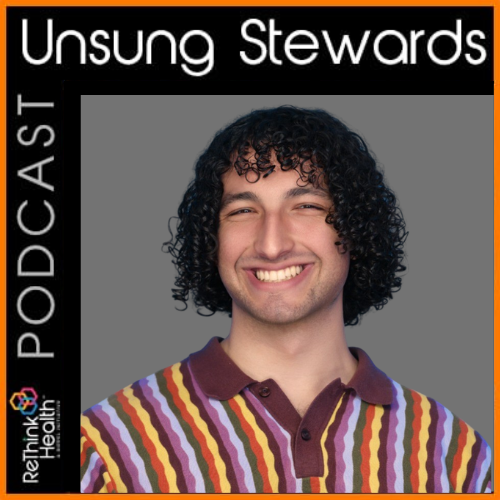
In this episode, I sat down with Alex Edgar, who co founded Youth250, an initiative of Made by Us. Using the backdrop of the 250th anniversary of the country, Youth 250 is centering young adults in efforts to shape our country's future.
Alex and I discuss the power and promise of young people, what it takes to build intergenerational coalitions, and how we can all create opportunities to embrace young adults as important contributors of the movement to thrive together.
I hope you enjoy our conversation.
Alex, it's so wonderful to have you here with us today. I love to start by inviting you to share your story with our audience. So tell us a little bit of how you came to be in the work you're in today and the many roles that you've held.
[00:01:35] Speaker B: My name is Alex Edgar. I'm 22 years old and based in Washington D.C. but my story starts in Southern California in a town called Simi Valley, which is and Simi Valley played such a huge role in who I am today as both someone who's deeply committed to civics and community engagement, but also someone who really sees the importance of youth empowerment and what it looks like when younger and older leaders come together.
So I have been doing service work my whole life. Like many kids, I was put into Cub Scouts when I was young and was always pushing really hard in school, but didn't really fall into it myself until 2020 when we went into the pandemic. As we were all sitting at home watching how it was happening during the summer of 2020 with Black Lives Matter, I really saw in my local community how little young people felt that their voices were being listened to in these big national issues that really resonated in unique ways locally. And myself and some friends put together a community wide voter registration drive for young people and we really focused on thinking through, particularly since there are definitely a strong Latino population In our community for folks that were first gen or didn't have parents who were citizens or parents that were not educated on what the civic process looks like, what are those missing gaps that they might not have? So we did sessions on school board elections and city council and really tried to bring what can often feel very out of reach for young people directly to them. And it was through that process I think I caught the civic bug. And when I went to UC Berkeley after graduating from high school, I ended up leading our campus wide and then eventually statewide voter coalition, really doing a lot of work on how do we bring young people into the civic process as equals, as co authors of this work.
And that process did not go super well for me as a young leader because there were so many rooms I was being brought into as the only Gen Z, the young voice in the room, the student voice in the room, making these massive decisions about statewide funding and resources and coordination.
And slowly over time, my 19 year old self got the bravery to say what about everyone else?
And it was through that process of pushing and pulling with the university and broader like nonprofit administrations, organizations, I really fell in love with what it looks like for young people to actually be seen as equals and share power with older adults. It really pushed me into the work I'm doing today, which is focused on working with young people across the country to help train them and help them see the power that they already hold. And then also working with institutions to help them better understand the positive impact for them and for the young people that comes from intergenerational leadership and collaboration.
So I'm doing this in my full time capacity where I Co founded Youth250 at Made by Us, which is really focused on the US 250th this year and bringing young people to the forefront of the leadership of this incredibly important national moment. But also have had the pleasure of advising many different foundations, nonprofits and serving on the board of two incredible nonprofits as their youngest board members at Points of Light Service nonprofit and cogenerate and intergenerational leadership nonprofit. And through all of this I really tried to bring as many young people into these conversations as possible. Because what I've seen is the power of seeing and understanding what you can be at such a young age is such a game changer. And it often takes older adults welcoming you in for young people to really see the impact of that in their purpose and in their ability to thrive.
I think oftentimes young people get put on this pedestal of they're going to change the world, they're going to save the world. And I always rev up by saying we have to do that together.
[00:05:41] Speaker A: I love it. So I'm really curious what happened to cultivate in you a belief that you could actually launch a profound movement, but even beyond that, just what gave you the desire, the will to stay in it, to feel like you could have an impact?
[00:06:02] Speaker B: I think a lot of that for me was as a result of the mentors I had in my life of all ages, from my near peers to my parents, to older leaders who supported me when I was getting ready to graduate from college. I was looking back and I could connect the dots from my high school teacher, Mr. Downey, who connected me to my first outside of school speaking opportunity and the domino effect of all of the other things that came.
And really just seeing how impactful it is to have strong leaders and mentors who uplift young people and are not intimidated by the success of young leaders in their spaces. I always tell the young people I work with that you have to have the audacity to believe in yourself because at the end of the day no one else will have that same belief in you. Because unless these organizations have already seen and experienced positive intergenerational collaboration and leadership, the likelihood that they're going to be the ones initiating this type of work is quite slim.
And the other thing that is advice I often give to the leaders that I work with is that it is a long and important but hard process to do intergenerational collaboration, right?
And oftentimes folks will want to bring young people to the table. But if they aren't doing the pre work themselves internally with their team to make sure that they actually have created the space in which that young person can thrive. It is heartbreaking to say how many young leaders that I've had the pleasure of working with over the years that are no longer doing this type of work because they have been burned one too many times by older adults that just wanted to take advantage of their insight, but not wanting to invest in that young leader in the long term. And I think this is not just when we're bringing young leaders in. Think about in general, when you're bringing more diverse leaders into spaces, when you're bringing folks who are representing a community into a space that they are not accustomed to and those leaders are not accustomed to that type of voice in the space.
It really is so critical that we put in the extra effort to make sure that all voices are able to thrive to in these types of decision making spaces. That are so critical if we want our country and our communities to thrive. That is a really intentional process across a really wide variety of backgrounds.
[00:08:27] Speaker A: Yeah, we often talk about belonging in civic muscle being a necessary condition in a community and a practical capacity. It is as much about the capacity of the traditional power and decision making makers as it is about anybody else coming into the space. So it will be no surprise to our listeners that you and I are from two different generations.
But I always walk away from our interactions learning something new. And you really give me things to think about and reflect on where I can do better in stewarding my role in a genuine value to bring young voices in.
So what do you think generations get wrong about each other?
[00:09:09] Speaker B: A whole lot first. One of the questions I always ask folks when I'm talking about intergenerational collaboration and relationships is to really take a second and think through do you have someone who isn't part of your generation that you'd consider a friend, a true friend, someone you'd go grab dinner with?
Most Americans tend to live in age size, right? And it's kind of by nature of how our society is structured, but it really creates such an incredible opportunity for us to better understand one another just by developing real relationships with folks that are in different generations. Because my second point is that when you live in these age silos, there's very specific representations of other generations that you're actually going to see and consume in the media. I always want to point out that most Gen Z are not the burn it all down people or the lazy don't want to do any work people. Right.
Those narratives are the ones that are most common online. And when it comes to what do generations get wrong about each other, I think the biggest thing is less of a, oh, there's a statistic to point to or a certain trait, but really the lack of understanding of one another is so easy to solve. And it is just by going into community, spending time with folks across generations. And that process really helps bridge that gap. And even for me, I am very loud and proud about the fact that I used to be ageist and when I was graduating from college, I think I, like many of my peers was in this moment of these old people need to get out of the way or else. But I feel very fortunate that now serve on the board of directors of Cogenerate. Right. As I was graduating from college and starting my job at Made By Us, began working with Cogenerate. And I think what I learned from working with them is just how many Older leaders are in those positions of authority that recognize the shifting tides, but also have such deep love and care for the work they've been stewarding. And the tension between the feeling of, oh gosh, these people outside want to burn it down, and these older leaders, who rightfully so, have created impactful change and feel like they have some ownership over stewarding where their community, their organization, whatever it may be, goes. And I think that over time and the more I've gotten deep into not just youth empowerment as an idea, but really this intergenerational leadership piece that we do at Made by Us and with a bunch of the organizations I work with, is that there is so much power that comes from younger and older people working together, and there's unique skills and values that come from each. And that ultimately it is about making sure folks on both ends of the spectrum feel comfortable with that sharing of power, which means more dialogue, more community building.
And through that process, a lot of the kind of getting wrong about each other between generations gets wiped away. For all of the possibility that is
[00:12:30] Speaker A: out there, I think what you're describing for me, every generation, if we're honest, has experienced this feeling of that generation is blocking me, won't get out of my way. They get it wrong, right? And we are just forgetting or pretending that it's somehow different this time. So you brought up Made By Us a little bit. Can you talk a little bit about the organization, the work you do, and why these institutions can be so key to building that belonging in civic muscle?
[00:13:02] Speaker B: I think Made by Us is such a cool organization because it was developed to respond to a real need in the community. Back in 2019, there was a group of leaders of cultural institutions across the country that were deep in conversation about the fact that they had done a pretty good job of engaging K through 12. And then they have good general community programming which tended to lean 50 or 65 plus in attendance. But this 18 to 30 year old age range, there was not a lot of work within the cultural institution field to actively engage these young adults as they are really developing into the humans that they would become. So that's what led to Made By Us launching and our board is entirely museum leaders. We remain very rooted in our cultural institutions because especially now when we're looking at Gen z, less than 50% of Gen Z trust the federal government, our political parties, the media, Congress, Supreme Court, tech companies, everything out there that are these major institutions.
Young people don't trust them, they haven't seen them work in their lifetime. So they don't put any faith into them. But there was a recent survey that made us really excited was that about 76% of young adults say that history organizations and museums are viewed as trustworthy, which is a really strong number. And for us, the reason why we see these cultural institutions as such an important piece of this civic and belonging conversation is that there are more cultural institutions than there are Starbucks in this country.
[00:14:45] Speaker A: Wow. But I don't think I knew that.
[00:14:48] Speaker B: Most people don't.
But you are much more likely to say, okay, here's the three local Starbucks in my hometown than oh, here are the three local museums in my hometown. And I think there's so many incredible opportunities for us to really welcome our communities in. Not just to learn, but actually to build community and to increase the civic purpose of these cultural institutions. And we've seen that in spades through our work. So over the past six, seven years of Mae Bias's work, we have seen such a massive increase in how our cultural institution partners are actually showing up in their communities from not just the youth angle. But we always say, if you do youth work better, you're going to do all work better. Because the type of intention and co design that's necessary to really build strong collaboration with young people actually has such ripple effects across the organization.
And so when we look at kind of our work at Made by Us, that co design process is about not just again, the educational purpose of a museum, but seeing how by bringing young people's leadership into co designing, what that looks like, from programming to exhibits to content to strategy to even a lot of our work now is also on leadership. How are we bringing young people into boards of directors and advisory councils for these cultural institutions to make sure that they're actually responding to what young people are seeing, thinking and feeling in ways that really resonate.
And through that process, we've seen a 47% increase in engagement with young adults from being a part of our work, which to us is a really powerful show, that when we build with young people, not for young people, the opportunity for those young people to feel seen and belonging and community within our institutions just rapidly increases.
[00:16:45] Speaker A: I want you to say more about the activations you have going on right now, because I know this is a particular season for you with both made by US and Youth250. Those examples, I think, will drive home some of the points that you're making.
[00:17:02] Speaker B: 100% so made by US organization and the kind of two main initiatives underneath. Made by US youth 250 civic season so all kind of one happy family and youth 250 I lead and civic Season. My teammate Nia leads and it's been going on for now six years. So Civic Season was started similar to actually my origin in doing this work. It was started the summer of 2020 when made by Us was just getting started and we're doing this listening tour with our partners and young people and recognize that a lot of young people just did not feel comfortable celebrating the 4th of July as they had been in previous years. So through this intergenerational design process made by us launched Civic Season in 2021 as a real youth led, community powered process for bringing folks together in communities across the country between Juneteenth and July 4th. So connecting our country's oldest and newest federal holidays as a time to really see communities engage young people in ways that they perhaps hadn't before. So in communities across the country we partner with pizza the polls who during election season sends pizza to the poll sites, but during civic season they send pizza to museums and cultural institutions across the country. Because we know one of the things that gets young people in the doors, free food. We've seen so many incredible events. One of our partners did a kind of kayak nature tour through a local river. This last year in D.C. i had the pleasure of emceeing the National Archives did a civics trivia night. They had hundreds of young people show up to do civics trivia. It runs all sorts of different shapes and sizes. Civic Season has become this opportunity for folks across the country to to really try something that might seem a little out there, but really brings young people in and to the forefront in really innovative ways. And then with youth250 it's the lot more kind of institution facing side of our work. It is training young people to train institutions to do youth engagement better. So We've done over 250 consultations over the past year, trained over 100 young people in how do you do this intergenerational design process in ways that work for young people but also work for our cultural institution partners. And one of the most exciting parts of building this community of youth250 Bureau members who are all paid for their time was we had the opportunity to bring a lot of them together in person in February at the National Constitution center and hosted an event called Youth250r Declaration. And the goal of this event was to position young people today, our Gen Z leaders, as the new founding generation. Because 250 years ago there was this really ragtag group of imperfect revolutionaries that set our country on the path that we are today.
And the thing that resonates most when we talk to young people is this idea that our Founding Fathers were a lot younger than our leaders today. Most of the Founding Fathers were in their late 20s, their 30s, their 40s. So really seeing this as an opportunity of how do we position ourselves as young leaders to carry the torch and lead this moment as an opportunity for change. So what we did in person, we had some incredible speakers and these letters to America, having young people share their messages to the country at the 250th. And they actually had the opportunity to craft their own declaration. So this U250 declaration was really guided by the Declaration of Independence itself. So we started off with the we hold these truths. What are the truths, the common realities of our generation? And then what are the things that are actually preventing young people from achieving the type of life and reality that they're looking for?
And then we ended with some declarations. And these young people from across the country had the opportunity to declare what they wanted to see from our generation, from our country going forward, and also shared some commitments of what they were going to do to make sure that this declaration becomes reality. And we're super excited that this process did not just end there is going to travel the country providing opportunities for communities all over to reflect on what does it mean to have this youth 250 declaration, 250 years after the Declaration of Independence, and also invite those community members to share their wishes, their dreams, their declarations at the 250th. So with all of these different pieces, it is really our goal that the 250th does not have to be something that's focused on American exceptionalism or American pessimism, but that every way for young people and community members in general to participate is focused on a more hopeful vision for the future. Because we know when given the opportunity, Americans do have hope for what is on the horizon, and that it is easy to get caught and lost in the news and the divisiveness.
But in reality, there is so much more that connects us than divides us. And through opportunities like our work here at Made By Us, we are really seeing what that looks like all across the country.
[00:22:34] Speaker A: So you've shared a lot about the work and the institutions, and you've had opportunity to really lead and influence in big ways.
But I'm curious how you think about your role as a steward of that work.
[00:22:48] Speaker B: I think my unique positionality in this work is That I am a young person, I'm 22 years old, but I also have the opportunity to deeply understand the strengths and weaknesses that many of our institutions have in the fabric of American life.
Oftentimes there is such a disconnect and understanding of the realities from folks at the top of the ladder and folks at the bottom of the ladder. And many of us who are just seeing what is on the news don't actually have the knowledge of what's going on behind the scenes. So I see myself as a young person, but also as someone who's deeply ingrained in a lot of these institutional settings as a translator to help make sure that the young leaders that I work with recognize that there's a difference between a target and an enemy when you're working on a campaign, right? That there, there are people who, who are there to be influenced, but that when they do a good thing that leads to positive change.
The answer shouldn't be, well, that's not 100%, that's 50%. It should be awesome. We made 50% there and the next time we're going to get the next 50%. And that's, I think, where folks like you and I, Becky, have real opportunity as people being deeply rooted in community, but also deeply rooted in institution. By translating what's going on in each of those spaces and helping break down the gap between those realities, we can push forward towards the type of thriving communities that we want to see that are often prevented from reaching that point because of some of the unintentional divisions that aren't always brought out to light. I always point to this idea that Gen Z has never seen lasting change as a result of social movements. Whether you look at 2008 and all of the work around Wall street there to march for our lives to the climate movement. Many of these major movements had either short term changes that were rolled back or largely didn't achieve their goals at all. And that type of process, when young people see that their voices, their hearts, their minds, their energy are not valued, it really is demoralizing. And when we know that only about 16% of young people think American democracy is working well for their generation, that is a real warning sign. They just don't think this system, the institution itself, is working. But the saving grace within that is that about 90% of young people say that they care about their communities.
And that is the role of stewards like you and I to help make that change and that narrative process possible so that young people and folks who have not seen themselves represented in our civic processes can feel better connected to this American experiment that we're a part of.
[00:25:44] Speaker A: Yeah.
So our organizations are both engaged in movement work and focused on uplifting and growing that movement across the country.
What is unlocked if we build a strong multi generational coalition?
[00:25:58] Speaker B: What for me, I think is the big problem of the next five, 10 years is figuring out what we are able to do to make sure that Gen Z and Gen Alpha have the same opportunity to thrive as previous generations have had. Every survey points to young people not feeling like they're going to live better lives than their parents, grandparents, generations. That is a real sign for all of us to stop and think and really reflect on not just what work we're doing in general that is focused on positive change, but what are we doing to make sure that as we're working on change, we are still creating the pipelines and the opportunities and for young people to see themselves as part of this movement, as part of this work towards better communities and thriving in every corner of the country. We really do need investment of time, energy and resources from our older leaders, from our institutions to ensure that there is that opportunity for young people to start building up their own experience and leadership in these types of spaces. So when we look at how are we building a strong multi generational coalition for the type of thriving world that we want to live in, I think a lot of that is the sharing power and space with young people. It's about being in community with young leaders and really making sure that we are investing in the process, not just the outcomes, making sure that young people see themselves represented. Because if we're building for and not with, they're not going to respond to what we're creating.
And I think also part of this is having a little bit of trust that young people know what's good for them. I think oftentimes, even in this process of intergenerational collaboration and leadership, there is still this idea of, okay, we need to listen to them, we need to have that perspective involved. But at the end of the day, we have veto power. And if you're doing good intergenerational work, there should be no veto power. Because truthfully, if you are collaborating on what this looks like, it's going to infuse the institutional knowledge, the experience of older leaders with the innovative knowledge that young leaders might have. And so I really do think that we have the opportunity to reach that thriving society that we are both dreaming of. It's going to take our cultural institutions serving as civics hubs. It's going to take our education system and really pushing young people towards purpose driven lives and careers, especially to take philanthropy and the government investing in solutions that create opportunities for young people and folks of all backgrounds to have access to opportunities. The only way any of this gets done is if we focus on getting this done together as this broader community of people who all believe that a more positive outlook in the future is possible.
[00:28:53] Speaker A: I love that. Okay, so the last question I want to ask. One of the things that's really interesting is kind of people who rate their potential future life experience higher do so because they can point to someone in their life who is giving them hope. What or who is giving you hope for the future?
[00:29:12] Speaker B: What brings me hope is going to sound a little counterintuitive, but the extent to which young people think that the system isn't working, that gives me a lot of hope because I would feel really scared if we were existing in the world we are in today and young people thought things were going in the right direction.
So I really see a lot of hope from my generation and the young people who are recognizing that these systems and institutions were not designed with them in mind and have not been creating opportunity for them to thrive.
And that their recognition of that and for so many of them, their willingness to go out and do something about that, that's what gives me hope. And the fact that so many older leaders and community members are experiencing the same thing of recognizing that whether this is the first time they've seen it or that they've been battling this their whole lives, recognizing that in this moment our institutions have not met the moment and that there's a real opportunity by all of us coming together, those with hope for what is possible, but a deep understanding of the reality of this moment, that only through that work we'll be able to reach the type of future where all of us can thrive.
[00:30:28] Speaker A: I love that it's a real construct that as systems collapse, people rise. And this is the moment of all moments for us to reclaim that, as you said. So thank you so much for spending this time with us. As always, it's a joy to be with you, to applaud your work and to just take hope in what you and your peers are doing. It is a true gift to all of us. So thank you, Alex, thank you so
[00:30:54] Speaker B: much, Becky, for having this space, for this conversation and for all the incredible work that you all do at Ripple. So grateful to be in this work with you.
[00:31:04] Speaker A: Thank you for listening to this episode of Unsung Stewards. We hope you took inspiration. Inspiration that will help you grow your own stewardship of a thriving future for all.
I want to thank Alex for joining us and for his work to elevate Gen Z and teach us all to be better intergenerational stewards of the future.
I'd also like to thank the team that makes this podcast possible, Molly Belsky, Layla Hussain, and Amanda McIntosh. If you liked this episode and want to hear others, you can rate and review this podcast or follow us on your favorite podcast app so you never miss an episode. Help us grow the movement to thrive together by sharing this episode with others.
I'm your host, Becky Payne. To learn more about our guests and their work, please visit our
[email protected] that's R I P P E L dot org we all hold deep gratitude for those who've been willing to share their stories with us.